THE ART OF DETAIL
Draping, tulle and embroidery: The character of a dress
Sometimes the character of a dress rests in a single detail: a fold gathered at the waist, fine layers moving through a skirt, or a floral motif revealed by the light. Looking more closely can help explain why a particular design feels right to you.
START READING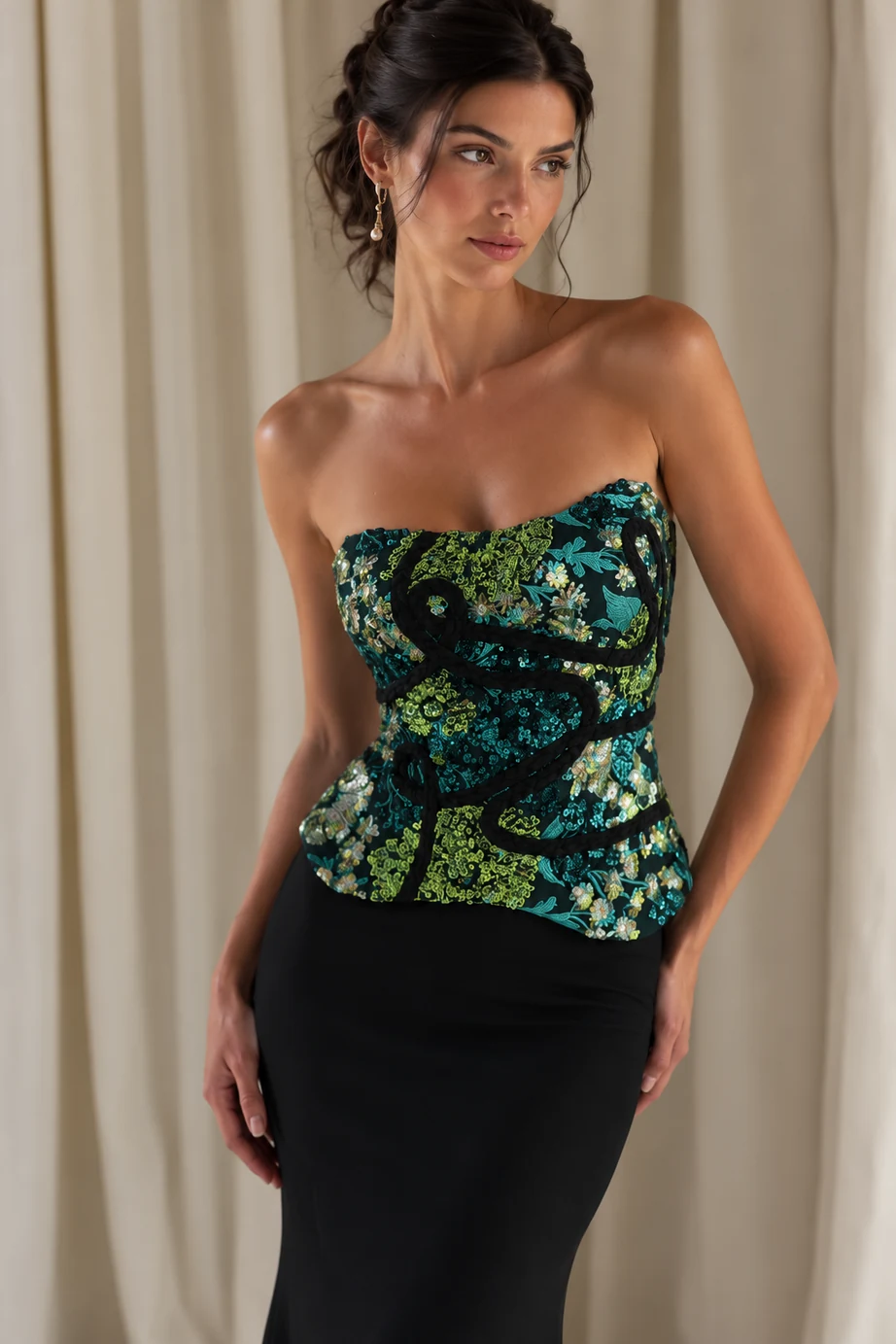
Draping: A line drawn in fabric
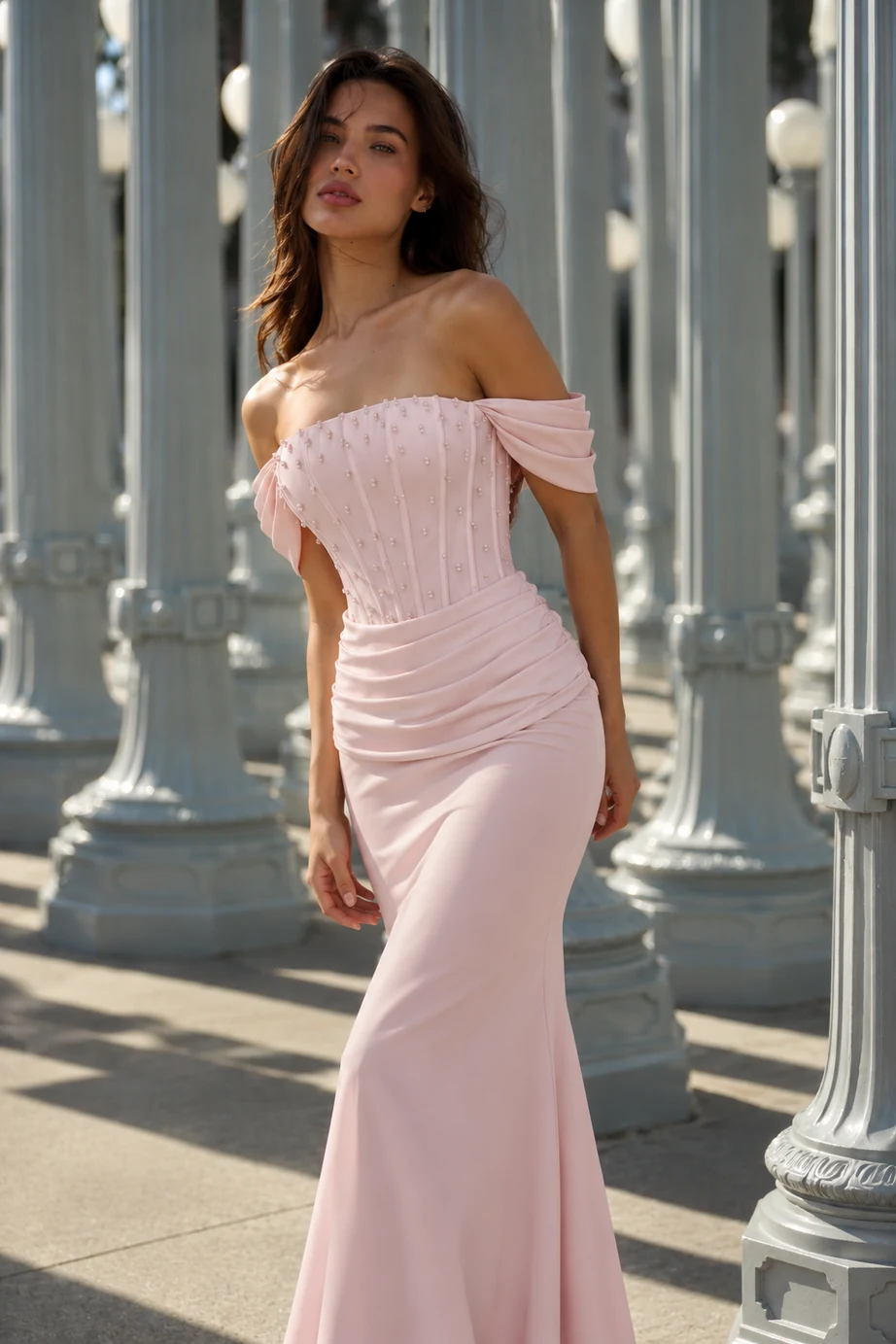
Draping considers the lines created as fabric is folded, gathered and directed. These lines can guide the eye and give rhythm to the neckline, waist or skirt. The same colour may take on a different character when those lines change.
Within the Zéyrafi collection, Sienna’s folds around the shoulders create a different movement from Lunessa’s gathering at the waist. When comparing the designs, consider how the draping relates to the whole silhouette, rather than simply counting the folds.
Tulle: A sense of layers and movement
The visual effect of tulle involves more than its delicate appearance. The arrangement of layers, the volume of a skirt and the way surfaces separate in motion all contribute to a design. A quieter bodice can find a different balance when paired with a moving skirt.
Victoria’s blush and sage interpretations reveal the relationship between an embellished bodice and a tulle skirt. Explore both the full silhouette and close-up photographs to understand the placement of details and the sense of volume.
Embroidery: Expression across a surface
Embellishment can be considered part of a design’s visual language. The placement of a motif, the space surrounding it and the contrast against its background all influence where attention is drawn.
Fleura’s pink floral and green floral looks explore that relationship through two different colour expressions. Within one design family, changing the colours of the motifs changes the feeling of the bodice. The collection galleries offer close-up photographs for looking at those details.
Read the details together
Draping, layers and embellishment do not create a simple ranking of quality. A design’s character comes from the way those elements work together. Look for a balance that appeals to you, rather than assuming that more detail is always better.
For product-specific information such as fabric composition, care and sizing, contact our atelier rather than drawing conclusions from a photograph. For a broader view of fashion craftsmanship, explore the Victoria and Albert Museum’s material on draping and embroidery.